The platform
One system for preparing lessons, running practice, assessing speaking, and seeing what every student is doing.

Teach
Everything that happens before the lesson.
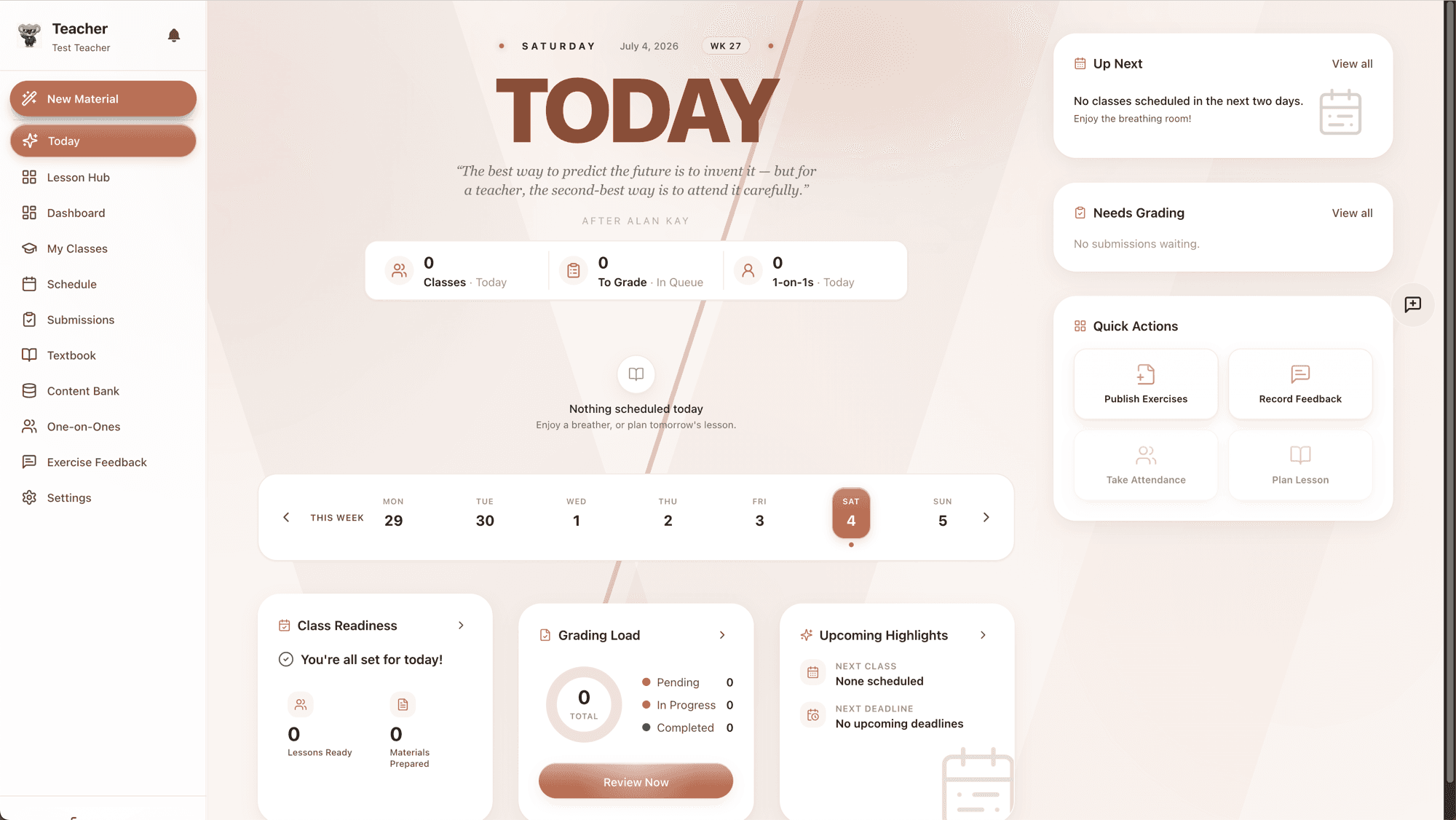

Textbook engine
Start from the books you already use.
Upload PDFs, scanned pages, or flipbook exports. Multimodal AI reads each page and extracts vocabulary, grammar points, dialogues, and reading passages into a structured content bank that the rest of the system draws on.
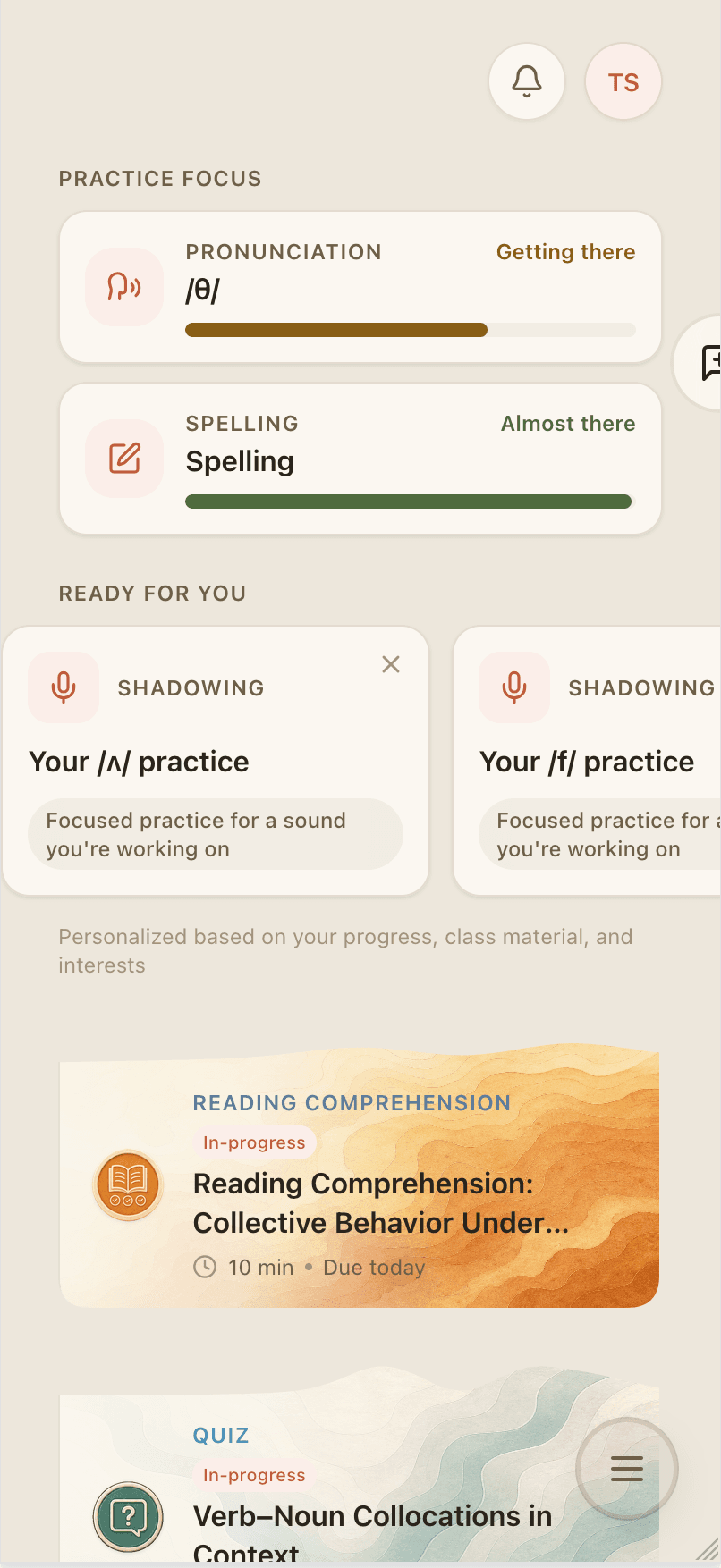
Lesson preparation
Generate a week of practice in a click.
Pick a textbook page and generate aligned exercises across all fifteen types. Add your own instructions to steer the output, review everything before it publishes, and edit anything you disagree with. Nothing reaches a student unreviewed.
Practice
What students do between your classes.
Exercise engine
Fifteen exercise types, four cognitive stages.
Recognition, guided production, constrained creation, free creation. A drill set walks a student through all four on one grammar point or vocabulary set, so they end up able to use it, not just recognise it.
- 01
Recognition
Quiz · Word matching · Word classification
- 02
Guided production
Fill in the blank · Word formation · Guided speaking
- 03
Constrained creation
Dialogue · Sentence builder · Image description · Reading comprehension
- 04
Free creation
Writing · Voice chat · Word explanation
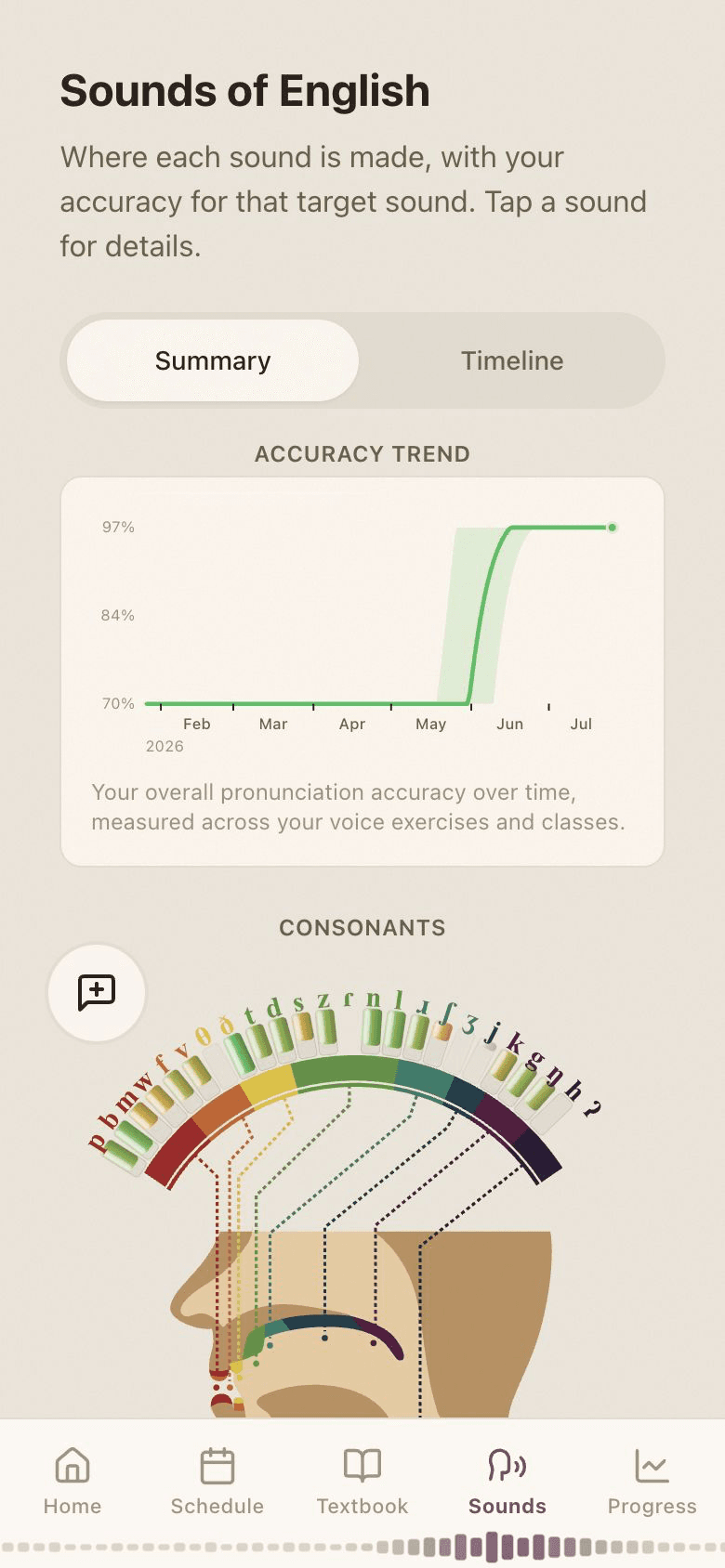

Voice lab
Every student speaks, and every student is heard.
Pronunciation is scored at the phoneme level for accuracy, fluency, and completeness, against the accent the student is aiming for. Mouth-shape guides show how to form the sounds they miss, and trends are tracked so improvement is visible over a term.
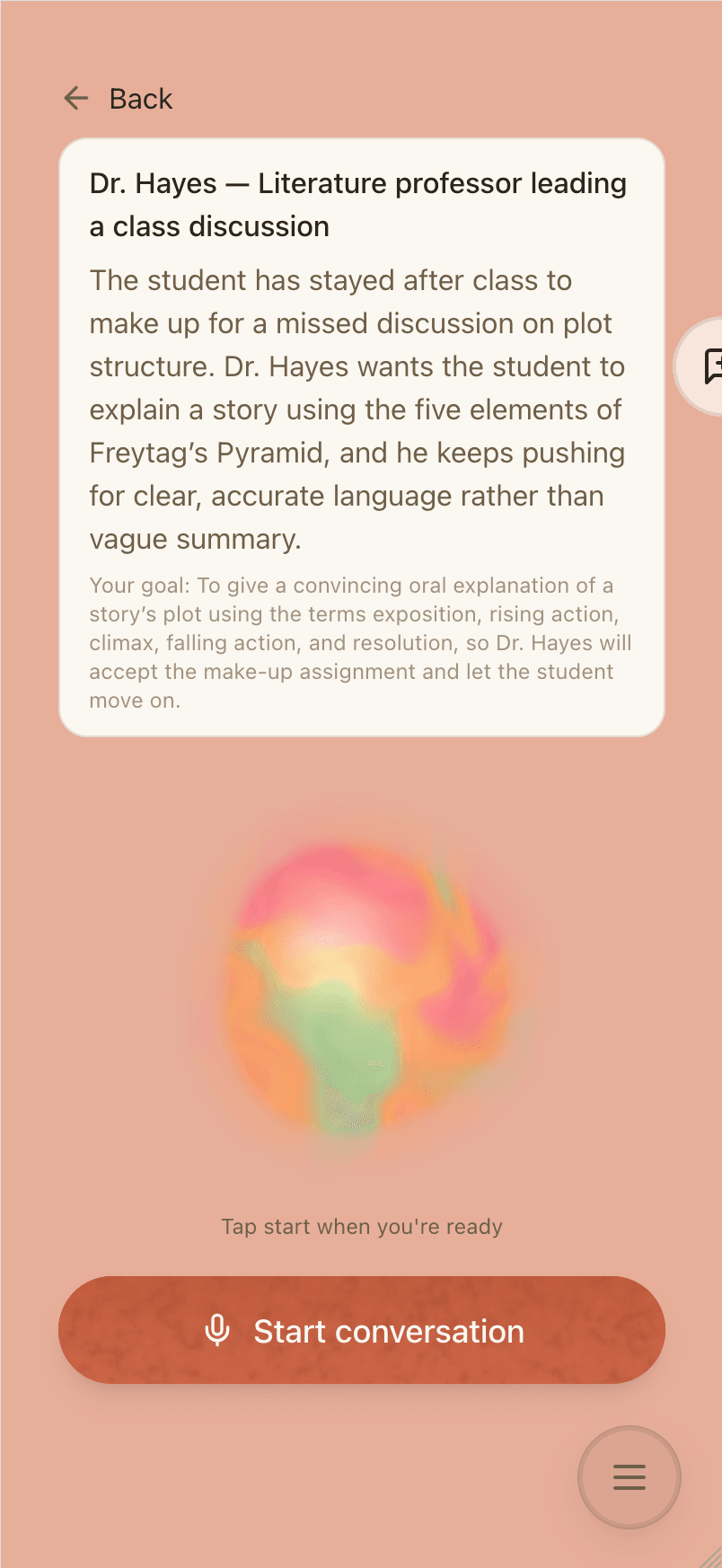
Conversation
Conversation partners that actually listen.
Scenario-based voice chat with distinct AI personalities, voice activity detection, and barge-in — a student can interrupt, the way people do. Audio streams over WebSocket, so feedback arrives in seconds.
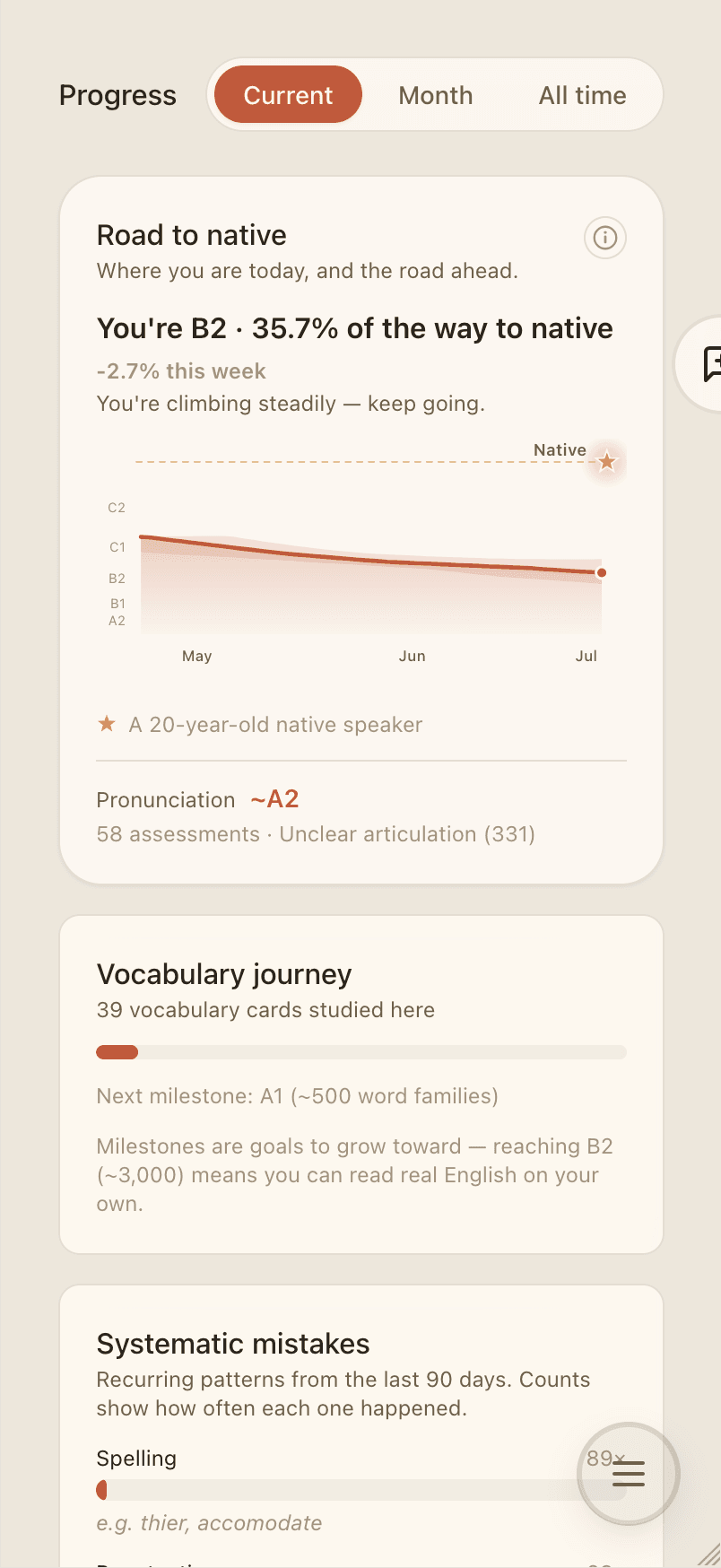
Flashcards
Remember it past the test.
Vocabulary and grammar return on an SM-2 spacing schedule. Instead of a right/wrong tap, the student explains the word and the AI grades accuracy, clarity, and examples — so the interval reflects how well they know it. Repeating a previous answer doesn't count.
See
The record everyone works from.
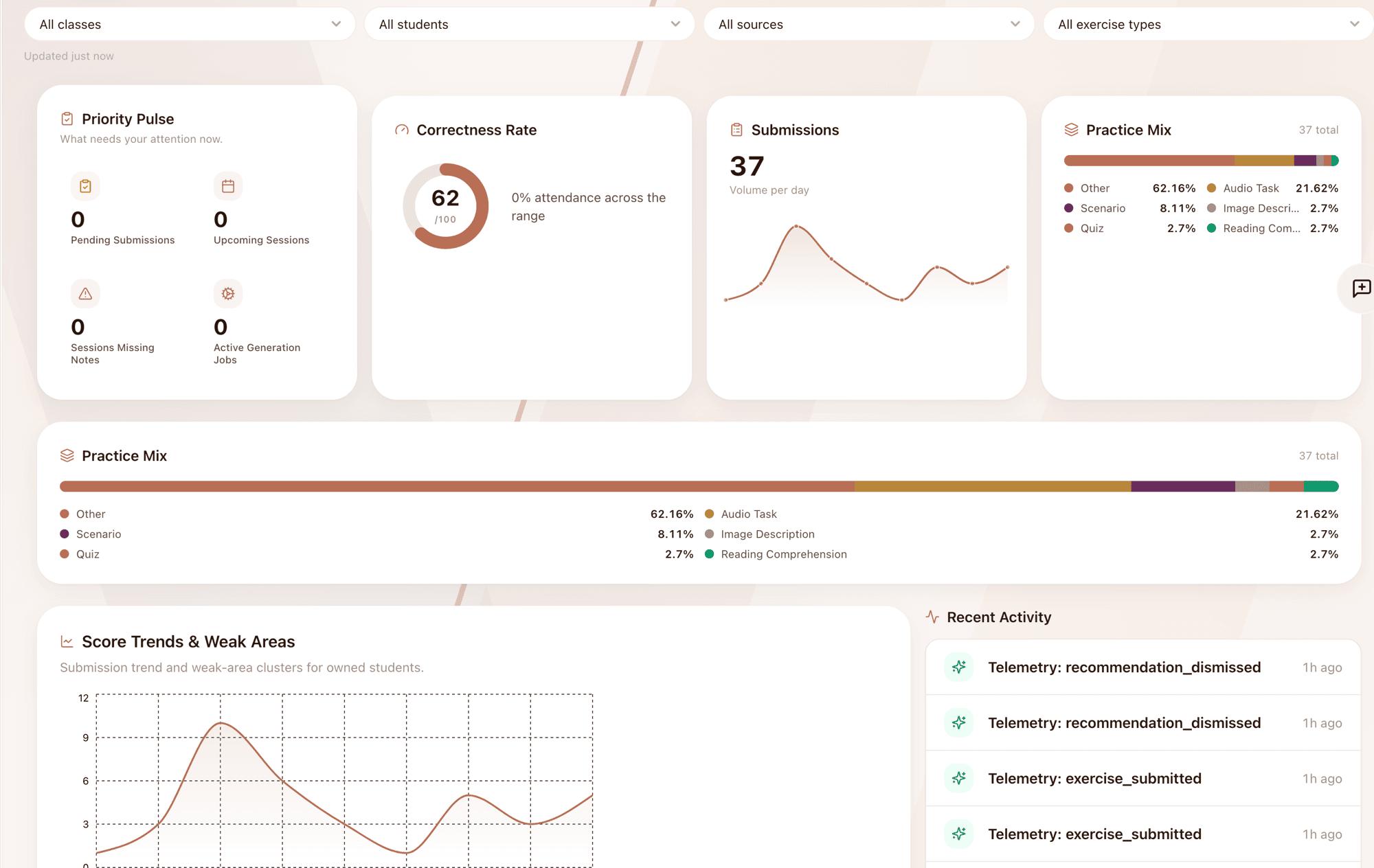
Analytics
Three dashboards, one record.
Admins see school-wide outcomes, teacher comparison, attendance trends, and students at risk. Teachers see their classes and each student's practice mix, retention, and pronunciation. Students see their own progress and what to do next.
One-on-ones
A language portrait from every session.
Each one-on-one produces an analysis of pet phrases, grammar patterns, vocabulary depth, fluency markers, and pronunciation issues. Run another months later and the system compares them, so you can show a parent exactly what changed.
Running the program
The administrative half of a school, in the same system.
- Class scheduling with recurring slots, closed dates, and session overrides
- Attendance tracking — present, absent, late, excused — with session notes
- Microsoft Teams integration: meetings created automatically, attendance synced
- Student onboarding by invitation link, with expiring tokens
- Parent portal with weekly reports by LINE or email
- Event management with LINE sign-in and place reservation
- Multi-campus, multi-tenant organisation structure
The games are part of the curriculum.
Teachers assign games from textbook vocabulary. Every round is scored and lands in the same student record as any other exercise.




See the platform with your own content.
A 30-minute walkthrough, tailored to your program.